The short answer surprises most people: every U.S. military branch pays the same base salary at the same paygrade and years of service. Total compensation differs because of special pays, enlistment and retention bonuses, housing allowance, and the kinds of jobs each branch concentrates on.
This guide covers the 2026 pay tables (a 3.8% raise took effect January 1, 2026), which branches currently offer the largest enlistment bonuses, and how special pays change the real take-home picture.
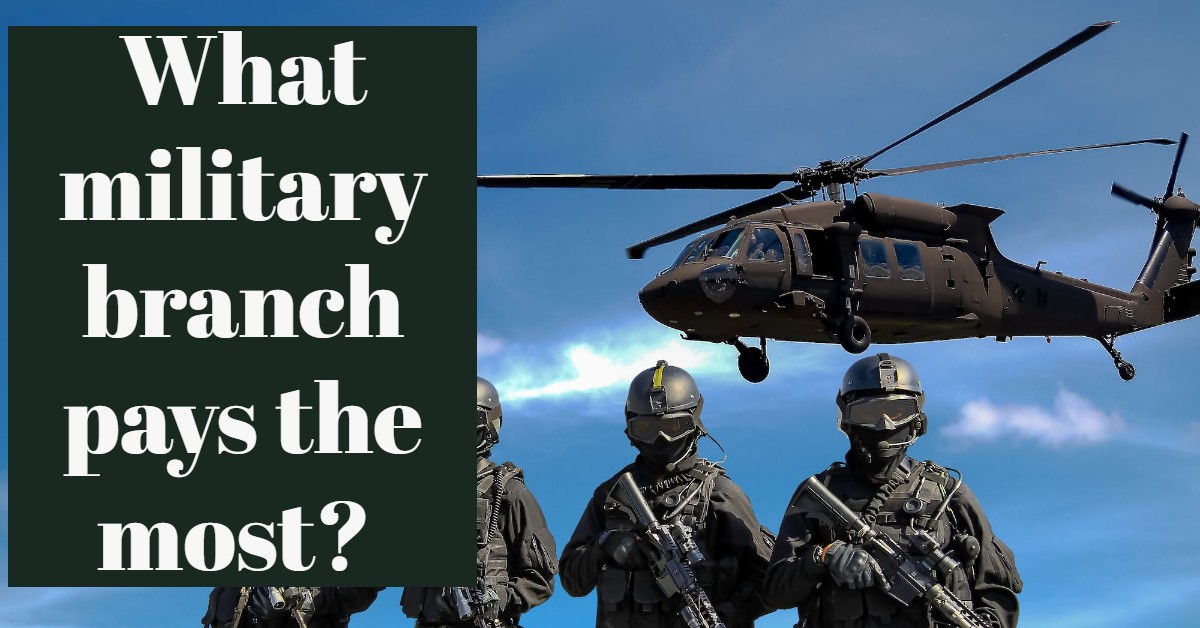
Base pay is identical across branches
The Department of Defense uses one pay scale for the Army, Navy, Marine Corps, Air Force, Space Force, and Coast Guard. An E-4 with three years of service earns the same monthly base pay whether they wear an Army, Navy, Marine, Air Force, Space Force, or Coast Guard uniform.
The 2026 raise (3.8%) is the largest in years and applies to all paygrades equally.
Where the real pay difference comes from
Once you fix base pay, the things that actually move total compensation are:
- Enlistment and retention bonuses — branch-by-branch, role-by-role, often five figures.
- Special and incentive pays — flight pay, dive pay, jump pay, hazardous duty pay, language proficiency pay, sea pay, special-duty assignment pay.
- Housing allowance (BAH) — varies by location and dependents, not by branch.
- The mix of jobs in each branch — branches with more aviation, nuclear, cyber, and special-operations roles see more service members qualify for high-value special pays.
On those measures, the Air Force, Navy, and Space Force tend to come out ahead because their job mixes are heavier on technical, aviation, and special-warfare specialties.
Which branch pays the most in 2026
Ranked by the size and breadth of bonuses and special pays available right now:
1. U.S. Navy
The Navy leads the bonus rankings in 2026 with combined enlistment incentives of up to $140,000 for nuclear field, special-warfare (SEAL, EOD, SWCC), and other high-demand ratings. Submarine and surface nuclear-trained sailors stack base pay with sea pay, sub pay, and nuclear-officer continuation bonuses that are among the largest in the services.
2. U.S. Air Force
The Air Force tripled its 2026 enlistment-bonus budget to roughly $141 million and is paying up to $40,000 in qualifying enlisted fields. Aviator retention bonuses run up to $50,000 per year. Roles with the largest flight, hazardous duty, and special-experience pays sit here.
3. U.S. Army
The Army offers stacked incentives that can reach $50,000+ for high-demand MOS choices in 2026, with quick-ship, airborne, Ranger, and other selections layered on top. Army Special Forces, Rangers, and aviation crews access separate special pays.
4. U.S. Space Force
The smallest service is paying disproportionately large bonuses to grow. The 2026 Guardian bonus pool tripled to $13 million, with 100 recruits receiving $40,000 each and 450 receiving $20,000. Targets are space-systems operations, cybersecurity, and intelligence specialties.
5. U.S. Marine Corps
The Marines historically run smaller bonus programs. Real upside comes from special pays for flight crews, recon and MARSOC operators, and jump-qualified personnel. Combat-deployment cycles also push HFP/IDP and family-separation pay higher in many years.
6. U.S. Coast Guard
The Coast Guard pays the same base scale and the same special pays for sea duty, aviation, and dive billets, but typically advertises the smallest enlistment-bonus program of the six branches. Long-term tradeoffs include shorter and more frequent stateside rotations.
2026 enlisted base pay (monthly)
| Rank | Monthly base pay |
|---|---|
| E-1 (over 4 months) | $2,407 |
| E-2 | $2,698 |
| E-3 | $2,837 – $3,198 |
| E-4 | $3,142 – $3,815 |
| E-5 | $3,343 – $4,422 |
| E-6 | $3,401 – $5,268 |
| E-7 | $3,932 – $7,067 |
| E-8 | $5,657 – $7,909 |
| E-9 | $6,910 – $10,729 |
E-1s with less than 4 months of service earn a slightly lower rate (around $2,225/month). After 6 months, all E-1s are paid at the over-4-months rate.
2026 warrant officer base pay (monthly)
| Rank | Monthly base pay |
|---|---|
| W-1 | $4,057 – $7,010 |
| W-2 | $4,622 – $7,714 |
| W-3 | $5,223 – $9,162 |
| W-4 | $5,720 – $10,654 |
| W-5 (20+ YOS) | $10,170 – $13,308 |
The Air Force and Space Force do not have warrant officer ranks.
2026 commissioned officer base pay (monthly)
| Rank | Monthly base pay |
|---|---|
| O-1 | $4,150 – $5,222 |
| O-2 | $4,782 – $6,618 |
| O-3 | $5,535 – $9,004 |
| O-4 | $6,294 – $10,510 |
| O-5 | $7,295 – $12,394 |
| O-6 | $8,751 – $15,000 |
| O-7 | $11,540 – $17,242 |
| O-8 | $13,888 – $20,022 |
| O-9 | $19,628 – $20,169 |
| O-10 | $20,169 |
The DoD caps officer base pay at the rate for Executive Schedule Level II (around $20,169/month in 2026), which is why O-9 and O-10 tables flatten near the top.
Special and incentive (S&I) pay
S&I pay is added to base pay and is taxable. The biggest categories:
- Hazardous Duty Incentive Pay (HDIP) — flight crews, parachute duty, demolition, toxic fuels, etc. Typically $150–$250/month.
- Hostile Fire / Imminent Danger Pay (HFP/IDP) — $225/month while serving in a designated zone.
- Sea pay — varies by paygrade and consecutive sea-duty time.
- Submarine pay — extra incentive for qualified submariners.
- Aviation Career Incentive Pay (ACIP) / Aviation Bonus — pilots and certain aircrews. Up to $1,000/month plus annual bonuses up to $50,000 in retention years.
- Diving pay — divers and combat divers.
- Foreign Language Proficiency Pay (FLPP) — up to $1,000/month for fluency in critical languages.
- Special Duty Assignment Pay (SDAP) — for billets like recruiter, drill instructor, or special-mission crew.
- Medical and dental specialty pays — physicians, dentists, and certain specialists earn substantial board-certification and retention bonuses.
Allowances
Allowances are non-taxable and often add 25–40% to take-home pay:
- Basic Allowance for Housing (BAH) — based on duty location, paygrade, and dependent status.
- Basic Allowance for Subsistence (BAS) — flat monthly food allowance.
- Cost-of-Living Allowance (COLA) — high-cost CONUS locations and overseas postings.
- Family Separation Allowance (FSA) — when on duty away from family for more than 30 days.
- Dislocation Allowance — for PCS moves.
- Clothing Allowance — annual for uniform upkeep.
Benefits beyond pay
- TRICARE health and dental coverage.
- Tuition Assistance up to $4,500/year on active duty, plus full Post-9/11 GI Bill after qualifying service.
- VA home loan eligibility (no down payment for qualifying borrowers).
- Retirement: Blended Retirement System (BRS) combines a defined-benefit pension at 20 years with TSP matching from year 2.
- VA disability compensation, education, and healthcare after separation.
- Tax exemption on combat-zone pay; certain state income-tax exemptions for active-duty pay.
Which branch is right for the most pay?
A practical way to read it:
- Highest immediate cash: Navy nuclear field — six-figure stacked enlistment bonuses plus continuous nuclear-incentive pays.
- Highest officer cash: Air Force aviator track — base pay plus ACIP plus annual aviation bonus, then retention bonuses.
- Largest non-aviation enlisted bonuses: Air Force, Army, and Space Force tech specialties.
- Largest sea-duty pay potential: Navy and Coast Guard.
- Best for stacked combat-zone special pays: Marine Corps and Army combat MOSs in deployment cycles.
The right answer depends less on the cap badge and more on which job you sign up for and how long you stay in.
FAQs
Which branch pays the most for new recruits?
The Navy. Total stacked enlistment incentives can reach $140,000 in 2026 for nuclear and special-warfare recruits. The Air Force is second at up to $40,000 in qualifying enlisted fields.
Do all branches use the same pay chart?
Yes. The 2026 base-pay table applies equally to the Army, Navy, Marine Corps, Air Force, Space Force, and Coast Guard.
How much does a new E-1 make in 2026?
$2,407 per month after 4 months of service ($28,886/year), before housing and food allowances. With BAH and BAS, real take-home is significantly higher in most duty stations.
What’s the largest single bonus available right now?
The Navy nuclear-field combined incentive package, up to $140,000 spread across enlistment, advanced training, and reenlistment milestones. Air Force aviation bonuses can reach $50,000 per year for multi-year retention contracts.
Do officers earn the same in every branch?
Base pay, yes. Officers in branches with more aviation, sea-duty, and special-warfare roles tend to qualify for more special pays — that’s where divergence shows up.
Is Coast Guard pay the same as DoD pay?
Yes, even though the Coast Guard sits under DHS most of the time. The same base-pay tables and most special pays apply.
What about the National Guard and Reserves?
Drill-pay rates are calculated as 1/30th of the matching active-duty monthly rate per drill day, plus active-duty rates for AT periods and mobilizations. Bonuses for Guard and Reserve enlistments are smaller but exist.
Recommended:
How Much Do Dallas Cowboy Cheerleaders Make?
What companies are in the capital goods field?
Highest Paying States for Nurse Practitioners
Leave a Reply
You must be logged in to post a comment.