Nigeria’s national symbols are: the green-white-green flag, the coat of arms, the national anthem (“Nigeria, We Hail Thee”, reinstated in 2024), the national pledge, the Costus spectabilis flower, the eagle, the naira and the National Theatre. Each carries a fixed meaning set down in law. Below is what every symbol stands for and the rules around its use.

National symbols are visual or verbal markers a country uses to project a shared identity. Nigeria’s symbols are protected by the Flags and Coat of Arms Act, the National Anthem Act 2024, and Central Bank of Nigeria currency rules.
The Nigerian flag

Nigeria’s flag is a horizontal tricolour: green – white – green, in three equal vertical bands. It was designed by Michael Taiwo Akinkunmi, then a 23-year-old engineering student in London, who won a 1959 national design competition. His original entry had a red radiating sun in the white band; the judges removed it.
The flag was hoisted for the first time at independence on 1 October 1960.
What the colours mean
- Green: Nigeria’s agricultural wealth and natural resources.
- White: Peace and unity.
Rules for flying the flag
- No other flag may be flown higher than the Nigerian flag in the same room or compound.
- The flag is hoisted at sunrise and lowered at sunset.
- It is flown at half-mast on days of national mourning.
- A torn or faded flag must be replaced — never displayed.
- It is an offence to deface the flag or use it as an advertising prop.
The Nigerian Coat of Arms

The Nigerian Coat of Arms was adopted in May 1960. It is a black shield bearing a wavy white “Y” (a heraldic pall), supported by two white horses, with a red eagle on top and yellow Costus spectabilis flowers around the base.
What each part means
- Black shield: Nigeria’s fertile soil.
- Wavy white “Y”: the meeting of the Niger and Benue rivers at Lokoja.
- Two white horses: dignity.
- Red eagle: strength.
- Green-and-white wreath: agriculture and unity.
- Yellow Costus spectabilis flowers: the national flower.
- Banderole: bears Nigeria’s motto, “Unity and Faith, Peace and Progress”, adopted in 1978. The earlier motto, “Peace, Unity, Freedom”, was used from 1960 to 1978.
It is an offence under the Flags and Coats of Arms Act to display the coat of arms in poor condition or to use it commercially without authorisation.
The national flower — Costus spectabilis

Costus spectabilis is a small yellow trumpet-shaped flower that grows wild across most of Nigeria. It became the official national flower in 1960. Although the actual plant has yellow petals, the four blooms on the coat of arms are stylised in red. The choice was based on its presence in every region of the country — a botanical metaphor for unity.
The national anthem — Nigeria, We Hail Thee
On 29 May 2024, President Bola Tinubu signed the National Anthem Act 2024 and Nigeria reverted to its original 1960 anthem, “Nigeria, We Hail Thee”, replacing “Arise, O Compatriots” which had been in use since 1978 (source). This is the anthem in use today.
Lyrics — Nigeria, We Hail Thee (current anthem)
Nigeria, we hail thee,
Our own dear native land,
Though tribe and tongue may differ,
In brotherhood we stand,
Nigerians all, are proud to serve
Our sovereign Motherland.
Our flag shall be a symbol
That truth and justice reign,
In peace or battle honour’d,
And this we count as gain,
To hand on to our children
A banner without stain.
O God of all creation,
Grant this our one request,
Help us to build a nation
Where no man is oppressed,
And so with peace and plenty
Nigeria may be blessed.
The lyrics were written by Lillian Jean Williams, a British expatriate living in Nigeria at independence, and the music composed by Frances Berda. Williams was paid £20 by the Nigerian government for the winning entry.
Lyrics — Arise, O Compatriots (former anthem 1978–2024)
For reference only — this is no longer the anthem.
Arise, O compatriots,
Nigeria’s call obey,
To serve our Fatherland,
With love and strength and faith.
The labour of our heroes past
Shall never be in vain,
To serve with heart and might
One nation bound in freedom, peace and unity.
O God of creation,
Direct our noble cause,
Guide our leaders right,
Help our youth the truth to know,
In love and honesty to grow,
And living just and true,
Great lofty heights attain,
To build a nation where peace
And justice shall reign.
The 1978 anthem was a composite, written by five competition winners (Eme Etim Akpan, John A. Ilechukwu, Sota Omoigui, P. O. Aderibigbe and B. A. Ogunnaike) and arranged by the Nigerian Police Band under Benedict E. Odiase.
How to behave during the anthem
- Stand still and face the flag if one is visible.
- Take off any hat or cap.
- Do not chew, talk, walk or use a phone.
- Do not start the next activity until the last note ends.
The national pledge
Recited in schools after the anthem since 1976. The pledge was written by Professor (Mrs) Felicia Adebola Adedoyin and adopted by decree under General Olusegun Obasanjo’s military government.
I pledge to Nigeria my country,
To be faithful, loyal and honest,
To serve Nigeria with all my strength,
To defend her unity,
And uphold her honour and glory,
So help me God.
The Naira

The Naira (₦) has been Nigeria’s legal tender since 1 January 1973, when it replaced the Nigerian pound at a rate of ₦2 = £1. The Central Bank of Nigeria is the sole issuer.
Current Naira denominations
- Coins: 50 kobo, ₦1, ₦2 (rarely circulated).
- Notes: ₦5, ₦10, ₦20, ₦50, ₦100, ₦200, ₦500, ₦1,000.
The notes carry portraits of national heroes — Sir Abubakar Tafawa Balewa on the ₦5, Alvan Ikoku on the ₦10, Murtala Muhammed on the ₦20, Nnamdi Azikiwe on the ₦500 and Aliko Dangote’s predecessors on the higher denominations. The ₦50 note shows a triad of a Yoruba, Igbo and Hausa-Fulani figure to symbolise unity in diversity.
The Nigerian Armed Forces
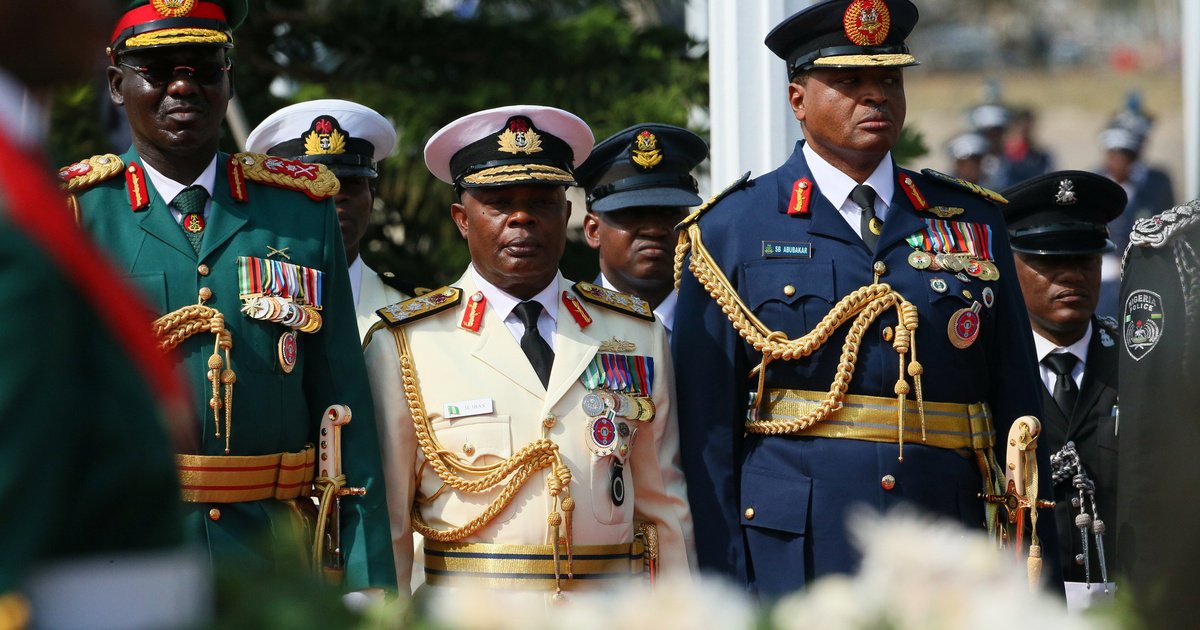
The Armed Forces of Nigeria — the Army, Navy and Air Force — defend the country’s territorial integrity. They are a recognised national symbol and represent Nigeria abroad through ECOMOG missions in Liberia and Sierra Leone, ONUCI in Côte d’Ivoire and UN peacekeeping deployments in Mali, Sudan and the DRC.
The National Theatre

Built in 1976 in Iganmu, Surulere, Lagos, the National Theatre is shaped like a military cap and was opened in time for FESTAC ’77 — the Second World Black and African Festival of Arts and Culture. After years of decay, it was renovated by the Bankers’ Committee under a CBN-backed scheme and reopened with new performance halls and creative hubs.
The eagle — national animal
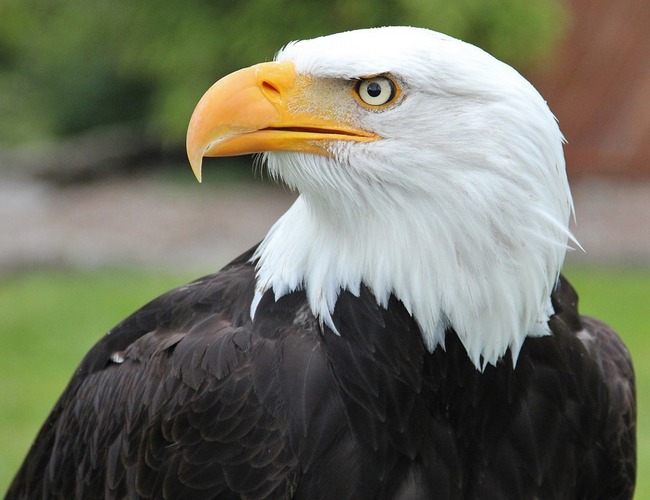
The eagle is Nigeria’s national animal. It also appears at the top of the coat of arms. The eagle was chosen for the strength it represents and its widespread presence across the savannah belt of the country.
Other Nigerian national identifiers
- National motto: “Unity and Faith, Peace and Progress” (1978–present). Replaced “Peace, Unity, Freedom”.
- National Independence Day: 1 October — the day Nigeria gained independence from Britain in 1960.
- Democracy Day: 12 June — moved from 29 May in 2018 to honour MKO Abiola.
- National sport: Football is widely treated as the de facto national sport.
The National Orientation Agency (NOA) is responsible for educating Nigerians on the proper use of these symbols.
Common questions
What is Nigeria’s current national anthem?
“Nigeria, We Hail Thee”, reinstated by the National Anthem Act 2024 on 29 May 2024.
Who designed the Nigerian flag?
Michael Taiwo Akinkunmi, in 1959. He was a student in London at the time.
What is the meaning of the wavy white “Y” on the coat of arms?
It represents the meeting of the Niger and Benue rivers at Lokoja.
What is Nigeria’s national flower?
Costus spectabilis — a yellow trumpet-shaped flower found across the country.
What is Nigeria’s national animal?
The eagle, also seen on top of the coat of arms.
When did Nigeria adopt the Naira?
On 1 January 1973, replacing the Nigerian pound.
Related
- The Nigerian Coat of Arms in detail
- Nigerian authors of all time
- List of Presidents of Nigeria
- List of governors in Nigeria
Many Nigerians do not know these facts. But why? I have toured schools in my state to get a picture of the Nigerian flag as flown today in our schools. Unfortunately, I found gruesome images of torn, worn out and ragged flags that no group will want to identify with let alone respect and be loyal to. I believe the disregard for the laws of this country is now being thought in our schools. The NOA has to do more because the abuse of this great national symbol is even more rampant in Government Schools and Offices.