The Economic Community of West African States (ECOWAS) currently has 12 member states: Benin, Cape Verde, Côte d’Ivoire, The Gambia, Ghana, Guinea, Guinea-Bissau, Liberia, Nigeria, Senegal, Sierra Leone, and Togo. Founded on 28 May 1975 through the Treaty of Lagos, ECOWAS started with 15 members. Mauritania left in 2000, and Burkina Faso, Mali, and Niger formally withdrew on 29 January 2025 to form the Alliance of Sahel States (AES). The current ECOWAS Chairman is President Julius Maada Bio of Sierra Leone. Headquarters: Abuja, Nigeria.

What is ECOWAS?
ECOWAS — the Economic Community of West African States — is a regional bloc set up to drive economic integration, free movement, and collective security across West Africa. It was founded on 28 May 1975 by the Treaty of Lagos, signed by 15 West African heads of state.
ECOWAS now has 12 member states covering roughly 5 million km² and a population over 400 million.
Also read: List of international airports in Nigeria
ECOWAS at a glance
- Founded: 28 May 1975 (Treaty of Lagos)
- Headquarters: Abuja, Nigeria
- Member states: 12
- Current Chairman: President Julius Maada Bio (Sierra Leone)
- Working languages: English, French, Portuguese
- Subsidiary: West African Economic and Monetary Union (UEMOA)
- Website: ecowas.int
Current ECOWAS member states (2026)
- Benin
- Cape Verde (Cabo Verde)
- Côte d’Ivoire (Ivory Coast)
- The Gambia
- Ghana
- Guinea
- Guinea-Bissau
- Liberia
- Nigeria
- Senegal
- Sierra Leone
- Togo
Countries that left ECOWAS
- Mauritania — withdrew in December 2000. Signed an associate-member agreement in 2017.
- Burkina Faso, Mali, Niger — formally withdrew on 29 January 2025 after announcing their exit in January 2024. The three junta-led states have since formed the Alliance of Sahel States (AES).
ECOWAS still recognises ECOWAS-branded passports issued by these three states and grants their citizens visa-free movement under transitional arrangements.
About each ECOWAS member state
Benin
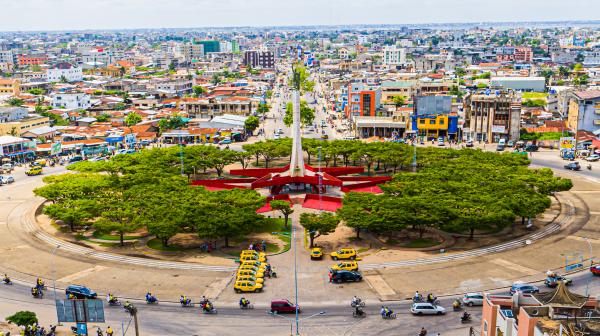
A French-speaking country on the Gulf of Guinea, Benin is the cradle of Vodun spirituality and the former Dahomey Empire (c. 1600–1900). Capital: Porto-Novo (official); Cotonou (seat of government).
Cape Verde

An archipelago of 10 volcanic islands in the central Atlantic, Cabo Verde covers about 4,033 km². Capital: Praia. Portuguese is the official language.
Côte d’Ivoire (Ivory Coast)

A West African coastal nation. Abidjan is the economic capital; Yamoussoukro has been the official political capital since 1983. Cocoa exports drive the economy.
The Gambia

A narrow country wrapped along the Gambia River, surrounded on three sides by Senegal. Capital: Banjul. Famous for Kiang West National Park and Bao Bolong Wetlands.
Ghana

The first Sub-Saharan African nation to gain independence (1957). Coastal location on the Gulf of Guinea, rich in gold, cocoa, and bauxite. Capital: Accra.
Guinea

Source of three of West Africa’s largest rivers (Gambia, Niger, Senegal). Holds about a third of the world’s known bauxite reserves. Capital: Conakry.
Guinea-Bissau

Atlantic-coast country, mostly low-lying. Distinguished from neighbouring Guinea by appending its capital, Bissau. Portuguese-speaking.
Liberia

Founded in 1822 by freed African-American slaves. Africa’s oldest republic. Capital: Monrovia (named after US President James Monroe).
Nigeria

Africa’s most populous country (over 230 million), home to ECOWAS headquarters in Abuja. Major oil and gas producer. Hundreds of languages including Yoruba, Igbo, Hausa, and English (official).
Senegal

Westernmost country in continental Africa, often called the “Gateway to Africa.” National symbols: baobab tree and lion. Capital: Dakar.
Sierra Leone

Named “Lion Mountains” by 15th-century Portuguese explorer Pedro de Sintra. Capital Freetown sits on one of the world’s largest natural harbours. Home of the current ECOWAS chairman, President Julius Maada Bio.
Togo
A narrow strip of land between Ghana and Benin. Capital: Lomé, on the Gulf of Guinea. French is the official language; phosphate mining and agriculture drive the economy.
FAQs
How many countries are in ECOWAS in 2026?
12, after the formal withdrawal of Burkina Faso, Mali, and Niger on 29 January 2025.
When was ECOWAS founded?
28 May 1975, by the Treaty of Lagos.
Who is the current ECOWAS chairman?
President Julius Maada Bio of Sierra Leone, who took over from Nigeria’s President Bola Tinubu in June 2025.
Why did Burkina Faso, Mali, and Niger leave ECOWAS?
The three junta-led states clashed with ECOWAS over sanctions imposed after coups, particularly the 2023 coup in Niger. They formed the Alliance of Sahel States (AES) as an alternative bloc.
Why is Cameroon not in ECOWAS?
Cameroon belongs to the Central African bloc CEMAC, not the West African one. It could in theory join, but the political case for it is weak.
Can I travel within ECOWAS without a visa?
Yes. The ECOWAS Protocol on Free Movement allows citizens of member states to travel, reside, and work within the bloc without a visa for up to 90 days, using a valid passport, ECOWAS travel certificate, or national ID card.
Can I visit Europe using my ECOWAS passport?
The passport is valid for international travel, but Schengen and other European destinations still require a separate visa.
Read also:
List of international airports in Nigeria
African Union member states
Visa-free countries for Nigerians
Leave a Reply