Quick answer: Nigeria mines tourmaline, aquamarine, topaz, sapphire, emerald, garnet, ruby, zircon, amethyst and opal — along with rarer species like paraiba tourmaline, kunzite and tsavorite. The country exported $15.2 million in gemstones in 2024, ranking 30th globally, with Nasarawa, Plateau, Kaduna and Oyo states leading production.
Precious stones list in Nigeria
Nigeria sits on the Pan-African pegmatite belt, the same geological province that runs through Mozambique, Tanzania and Madagascar. That belt is responsible for nearly all the country’s coloured gemstone wealth. The leading producing states are Nasarawa, Plateau, Kaduna, Oyo, Bauchi, Taraba, Kogi, Niger and Adamawa.
Tourmaline (including Paraiba)

Tourmaline is Nigeria’s flagship gemstone. The country is one of only three commercial sources for paraiba tourmaline, the neon-blue-green variety coloured by copper — Brazil and Mozambique are the others. Top-grade Nigerian paraibas have fetched over $20,000 per carat at international auction. Major deposits: Edeko (Oyo), Ofiki (Oyo), Kaduna, Nasarawa, Bauchi.
Aquamarine
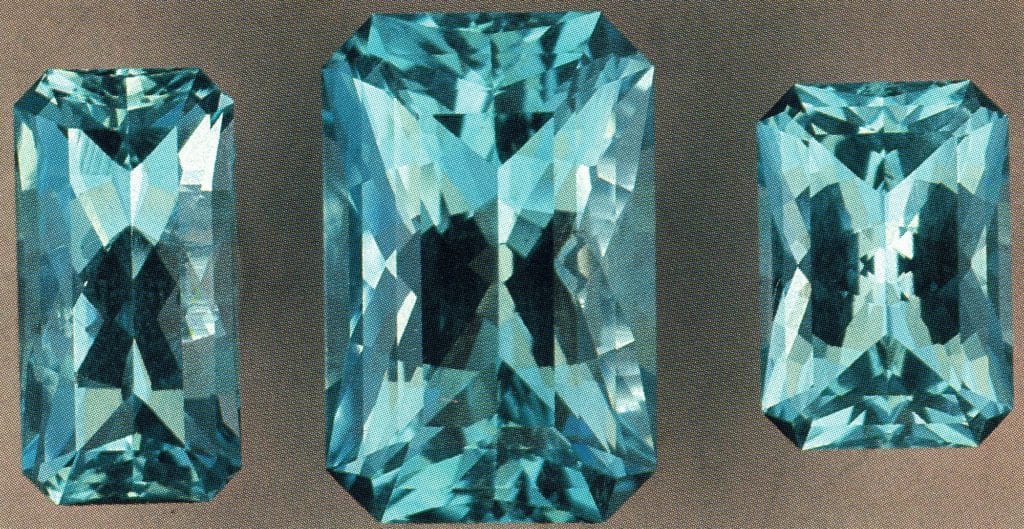
A blue to greenish-blue beryl, prized for its glacial colour and clarity. Aquamarine is one of the country’s top three gemstone exports by weight. Found in: Plateau (Jos), Kogi, Nasarawa, Oyo and Ogun.
Topaz

Round-three of Nigeria’s commercial gemstone trio. The country produces colourless, blue, sherry-brown and rare pink-red imperial topaz. Pink-red and orange-red imperial topaz commands the highest price. Mining areas: Jos (Plateau), Bauchi, Nasarawa (Jenta, Akwanga) and Oyo.
Sapphire
Northern Nigeria — particularly Kaduna, Bauchi and Plateau — is now one of West Africa’s main sapphire frontiers. Most rough is blue to teal, with some pink and yellow material. Heat-treated Nigerian sapphire is widely used in mid-market jewellery.
Emerald

Nigerian emerald is mined in small but consistent quantities, mainly in the north-central belt. Colour ranges from medium green to deep grass-green; clarity is usually included, which is normal for emerald worldwide.
Garnet

Almandine, pyrope, spessartite (orange) and rhodolite (raspberry-pink) all occur in Nigeria. Spessartite garnet from Nasarawa is internationally recognised for its mandarin colour.
Ruby

Found in Adamawa, Sokoto, Taraba and Plateau. Most Nigerian ruby is small-stone production used for cabochon cutting rather than faceting, though some faceting-grade material reaches Asia.
Zircon

A high-refractive-index gem often used as a low-cost diamond simulant before cubic zirconia took over. Mined chiefly in Kaduna.
Amethyst
The violet variety of quartz. Nigerian amethyst is found in Nasarawa and Kogi. Colour ranges from pale lavender to a deep “Siberian” purple.
Opal

Northern Nigeria produces small quantities of common opal and occasional fire opal. Volumes are modest compared to Ethiopia, which dominates the African opal trade.
Rare and emerging species
Phenakite, kunzite, tanzanite, tsavorite and lepidolite have been reported in commercial parcels from Nasarawa and Plateau in recent years. Most leaves the country uncertified and is recut abroad.
Nigeria’s gemstone exports (latest data)
Nigeria exported $15.2 million in gemstones in 2024, placing it 30th worldwide, according to UN Comtrade figures cited by The Guardian. The official total understates reality — most Nigerian gemstones are sold informally and leave the country in suitcases, missing the export statistics entirely.
| Indicator | 2024 figure |
|---|---|
| Official gemstone export value | US$15.2 million |
| Global ranking | 30th |
| Estimated informal/unofficial exports | US$300m – US$1bn (industry estimates) |
| Top three produced gemstones | Tourmaline, aquamarine, topaz |
| Main destination markets | Hong Kong, USA, Switzerland, India, France |
Where Nigeria’s gemstones are mined
| State | Main gemstones |
|---|---|
| Nasarawa | Tourmaline, aquamarine, emerald, amethyst, topaz, garnet, zircon, sapphire |
| Plateau (Jos) | Aquamarine, topaz, sapphire, ruby, amethyst |
| Kaduna | Sapphire, tourmaline, aquamarine, zircon |
| Oyo | Tourmaline (Ofiki, Edeko), aquamarine, topaz |
| Bauchi | Sapphire, tourmaline, topaz |
| Taraba | Ruby, sapphire, tourmaline |
| Adamawa | Ruby, sapphire |
| Kogi | Aquamarine, amethyst |
| Niger | Aquamarine, tourmaline |
| Sokoto | Ruby |
Reference gemstone prices (per carat, 2026)
Prices below are top-grade auction-room references — typical commercial-grade stones sell for a small fraction of these values.
- Blue Diamond — up to $3.93m
- Jadeite — up to $3m
- Pink Diamond — up to $1.19m
- Ruby (Burmese top colour) — up to $1.18m
- Emerald (Colombian Muzo) — up to $305,000
- Alexandrite — up to $70,000
- Musgravite — up to $35,000
- Paraiba Tourmaline — up to $20,000+ (Brazilian, exceptional)
- Red Beryl — up to $10,000
- Black Opal (Lightning Ridge) — up to $9,500
- Tanzanite — up to $1,200
Uses of precious stones in Nigeria
Jewellery
Most cut stones end up in earrings, rings, pendants and bridal sets. Nigerian fashion designers increasingly source local sapphire and tourmaline for custom work.
Industrial
Garnet abrasives, ruby and sapphire bearings, and zircon for ceramic glazes are all consumed by Nigerian and West African manufacturers.
Investment and birthstones
Coloured stones with strong colour, clarity and provenance are an inflation hedge for Nigerians wary of naira volatility. The astrological birthstone trade is small but growing in Lagos.
Foreign exchange
At full formal-export capacity, the sector could contribute hundreds of millions of dollars annually. Government efforts since 2024 to formalise the trade through the Solid Minerals Development Fund have made modest progress.
Top African gemstone exporters (2024)
- Mozambique
- Madagascar
- Tanzania
- Ethiopia
- South Africa
- Zambia
- Nigeria
- Kenya
- Zimbabwe
- Democratic Republic of Congo
Challenges in Nigeria’s gemstone industry
- Informal mining. An estimated 80% of production is artisanal, off-grid and untaxed.
- Smuggling. Rough is routinely flown out unrecorded to Bangkok, Mumbai and Hong Kong cutting houses.
- No local cutting capacity. Nigeria has only a handful of professional lapidaries, so almost all value addition happens abroad.
- Security. Banditry and kidnap risk in Zamfara, Kaduna and parts of Plateau have closed several mine sites.
- Title disputes. Overlapping licences and community ownership claims slow formal investment.
FAQ
What is the most valuable precious stone mined in Nigeria?
Paraiba tourmaline. Top-grade neon-blue stones can exceed $20,000 per carat in international markets.
Which Nigerian state has the most gemstones?
Nasarawa is the most prolific producer, with commercial deposits of tourmaline, aquamarine, emerald, amethyst, topaz, garnet and zircon.
Are diamonds mined in Nigeria?
Trace diamond occurrences have been reported in the Bida Basin and parts of Cross River, but no commercial diamond mining exists in Nigeria.
Can a private citizen mine gemstones in Nigeria?
Yes, but you need a Small-Scale Mining Lease issued by the Mining Cadastre Office. Operating without one is illegal.
Where can I sell Nigerian gemstones legally?
The Nigerian Mineral Exchange in Abuja, the Bauchi Gemstone Market, and registered exporters licensed by the Ministry of Solid Minerals Development.
I want invest in the business of fine stones. Where and how can i get genuine sellers and buyers?