The U.S. Army accepts qualified non-citizens who are lawful permanent residents (Green Card holders, Form I-551). If you don’t have a Green Card and are living outside the United States, you can’t enlist directly — you have to secure permanent residence first, then apply through a U.S. recruiter once you’re physically in the country.
This guide covers who’s eligible in 2026, the application steps, the path to U.S. citizenship through service, and the recent changes to age and waiver rules that opened the door to more foreign-born applicants.
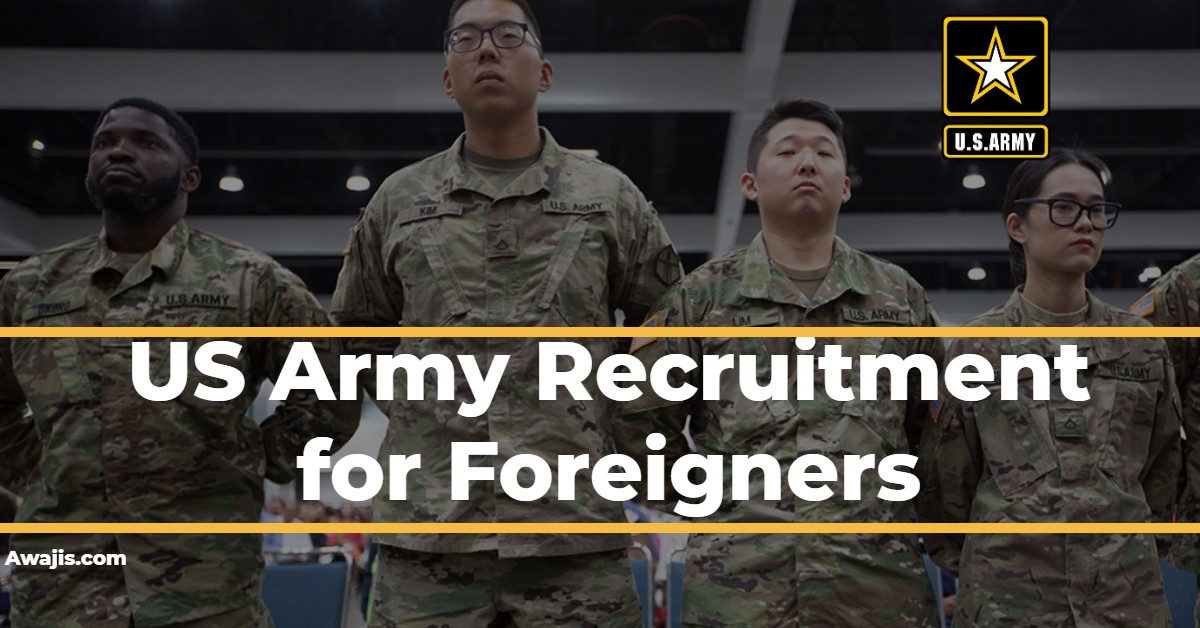
Who can enlist as a non-citizen in 2026
- Lawful permanent residents (Green Card holders) can enlist in the active Army, Army Reserve, or Army National Guard on the same terms as U.S. citizens — same age, education, fitness, ASVAB, and conduct standards. You must be physically present and legally living in the U.S.
- Temporary visa holders (student, work, tourist) and undocumented immigrants are not eligible.
- MAVNI (Military Accessions Vital to the National Interest), which previously let some non-immigrants with critical language or medical skills enlist without a Green Card, has been suspended since 2017 and has not resumed. Don’t bank on it returning.
- DACA recipients are not currently eligible to enlist.
What changed in 2026
The Army made two recruitment-rule changes in 2026 that matter for foreign-born applicants:
- Maximum enlistment age raised from 35 to 42. The new policy was announced March 20, 2026, and took effect April 20, 2026, covering the Regular Army, Reserve, and National Guard.
- Marijuana-possession waivers eased. A single past conviction for possession of marijuana or paraphernalia no longer requires a waiver to enlist.
The minimum age stayed at 17 (with parental consent) or 18 (without).
Eligibility requirements
Identity and immigration
- Valid, unexpired Green Card (Form I-551).
- Physically present and legally residing in the U.S. at the time you apply.
- Social Security number.
Age
- 17 with parental consent, or 18 without.
- Maximum 42 for active duty, Reserve, and National Guard (raised from 35 in April 2026).
- Officer and warrant-officer routes remain closed to non-citizens — only enlisted ranks are open until you naturalize.
Education
- High-school diploma is preferred.
- GED is accepted but typically with a higher ASVAB score requirement.
Aptitude
- Pass the ASVAB. Minimum AFQT score is 31 for high-school graduates, 50 for GED holders. Specific MOS (jobs) require higher line scores.
Medical and physical
- Pass a medical exam at a Military Entrance Processing Station (MEPS).
- Meet height, weight, and body-composition standards.
- Pass the Army Combat Fitness Test (ACFT) once at basic training.
Background and conduct
- Pass a criminal-background check. Most felonies require a waiver, some are disqualifying.
- No prior dishonorable discharge from any military service.
Language
- Speak, read, and write English well enough to follow instructions and complete forms. Recruiters informally screen for this in your first conversation.
How to apply (step by step)
- Get your Green Card first. Without it, the rest of the process won’t start. Routes: family-based petitions, employer sponsorship, refugee/asylee status, diversity visa lottery.
- Contact a recruiter. Find your nearest office through goarmy.com/how-to-join. Walk in with your Green Card, passport, Social Security card, and any school transcripts.
- Initial screening. The recruiter checks age, immigration status, education, and any disqualifying conditions on the spot.
- Take the ASVAB. Many recruiters use a practice test (PiCAT) before the full exam. Your score determines which MOS you qualify for.
- Go to MEPS. Medical exam, fingerprinting, background check, and final job selection. You’ll be there 1–2 days.
- Sign the contract. You commit to a specific MOS, an enlistment term (typically 3, 4, or 6 years active), and a ship date for basic training.
- Take the oath of enlistment. You become a soldier on contract, scheduled for the next available basic-training cycle.
- Basic Combat Training (10 weeks) followed by Advanced Individual Training (AIT) for your MOS.
MOS limits for non-citizens
Most enlisted Army jobs are open to Green Card holders. The exceptions:
- Any MOS that requires a security clearance (Secret or above) — most Intelligence, Signal/Cyber, Special Forces support, and PSYOP jobs. These open up only after you naturalize.
- Cryptologic Linguist (35P) — clearance-dependent.
- Any MOS your recruiter flags as “U.S. citizen only” on the current eligibility list (this list is updated frequently).
Your recruiter and MEPS counselor will tell you exactly which MOS are open to your file before you sign.
Citizenship through Army service
Honorable U.S. military service unlocks an expedited naturalization track under sections 328 and 329 of the Immigration and Nationality Act. The basics:
- You can apply after one day of qualifying active-duty service during a designated period of hostilities (still in effect under a Bush-era executive order that has been continuously extended), or after one year of service in peacetime.
- USCIS waives the residency and physical-presence requirements that civilian applicants face.
- The naturalization application (Form N-400, military version) is filed through your unit’s chain of command and the JAG office, not at a civilian USCIS office.
- Service members can be naturalized abroad; ceremonies happen at U.S. embassies and consulates.
USCIS publishes the latest military-naturalization policy on its website. The process has tightened since 2025: uncharacterized discharges on or after August 1, 2024 no longer count as service “under honorable conditions”; veterans living abroad can no longer naturalize at a port of entry and need a visa or parole to attend a U.S. interview; and the 2025 civics test is longer and harder. Approvals have also slowed — file early and expect longer waits.
Common pitfalls
- Letting your Green Card lapse. An expired I-551 stops processing cold. Renew (Form I-90) at least six months before any expiration date.
- Assuming MAVNI will return. It hasn’t been active for years. Plan around the Green-Card pathway.
- Hiding past arrests or convictions. Recruiters and MEPS run a fingerprint check; lying disqualifies you faster than the underlying offense usually would.
- Applying for officer slots before naturalizing. Officer and warrant-officer commissioning requires U.S. citizenship by federal law — no waivers.
- Believing recruiter promises that aren’t in writing. Bonus, MOS, school slot, station of choice — if it’s not in your enlistment contract, it’s not guaranteed.
FAQs
Can I enlist from outside the U.S.?
No. You must be physically present in the U.S. with a valid Green Card to start the enlistment process. Recruiting offices outside the country handle existing service members and their families, not new accessions.
What’s the maximum age in 2026?
42 for the Army (active, Reserve, and National Guard) as of April 20, 2026. The other branches set their own limits — Navy 41, Air Force 42, Marines 28, Space Force 42, Coast Guard 31.
Will my MOS be limited because I’m not a citizen?
Yes — anything requiring a security clearance is closed to you until you naturalize. That excludes most intelligence, cyber, and special-operations support roles. Combat arms, logistics, medical, transportation, mechanics, cooks, and many other MOS remain open.
Does enlisting guarantee U.S. citizenship?
No, but it puts you on an expedited path. You still file Form N-400 and meet good-moral-character and English/civics requirements. The waiting period and physical-presence rules are waived. Since late 2025 USCIS has processed naturalizations more slowly, so the military track is faster than the civilian route but no longer quick.
How long is the commitment?
Typical active-duty contracts run 3, 4, 5, or 6 years, plus an Inactive Ready Reserve obligation that brings the total Military Service Obligation to 8 years.
Can DACA recipients enlist?
Not currently. The MAVNI pathway that briefly opened to some DACA holders has been suspended since 2017.
Is the application fee waived?
There is no application fee for enlistment. Anyone asking you to pay a fee to apply is running a scam — go through goarmy.com or a physical recruiting office.
Bottom line
The U.S. Army takes about 8,000 non-citizen Green Card holders into its enlisted ranks each year, and the rules in 2026 are actually friendlier than they’ve been in a decade — older applicants up to 42 can now enlist, and minor marijuana history no longer needs a waiver. MAVNI is still off, so the only real foreign-born pathway is Green Card → recruiter → MEPS → contract, with citizenship available on an accelerated track once you’re in. Start with your immigration paperwork and an in-person visit to a recruiter’s office.
Related
Nigerian Military Ranks — Army, Navy, and Air Force
List of Army Barracks in Nigeria
Nigerian Army Recruitment Exam Centres
my friend that i talk two from the 82nd air borne online said i sould message me back message my going to like meeting u u got my email from michael
I want to join us army foreigner from Nigeria this is my phone number.+2347044580906
I ONLY WISH TO WORK FOR THE US MILITARY AS LONG AM BREATHING….MY EMAIL IS;okangastephen319@gmail.com.my dream is to be in the Navy Seals Team 6 after passing through Delta Group and rangers
Am Dalisoul from Zambia i want to join US military
Hi. Am Nji moses from Cameroon. Is the sevrage age always 22yrs?
Please I want to join Us Army
How can I become it?
I’m from Nigeria.
Am shadreck chagunda from Malawi , am willing to join US MILITARY
Am 20 years female of Ugandan origin and would like to join the USA army,
I want to join military band
Am peter kariuki gichohi from kenya I want to join US army please