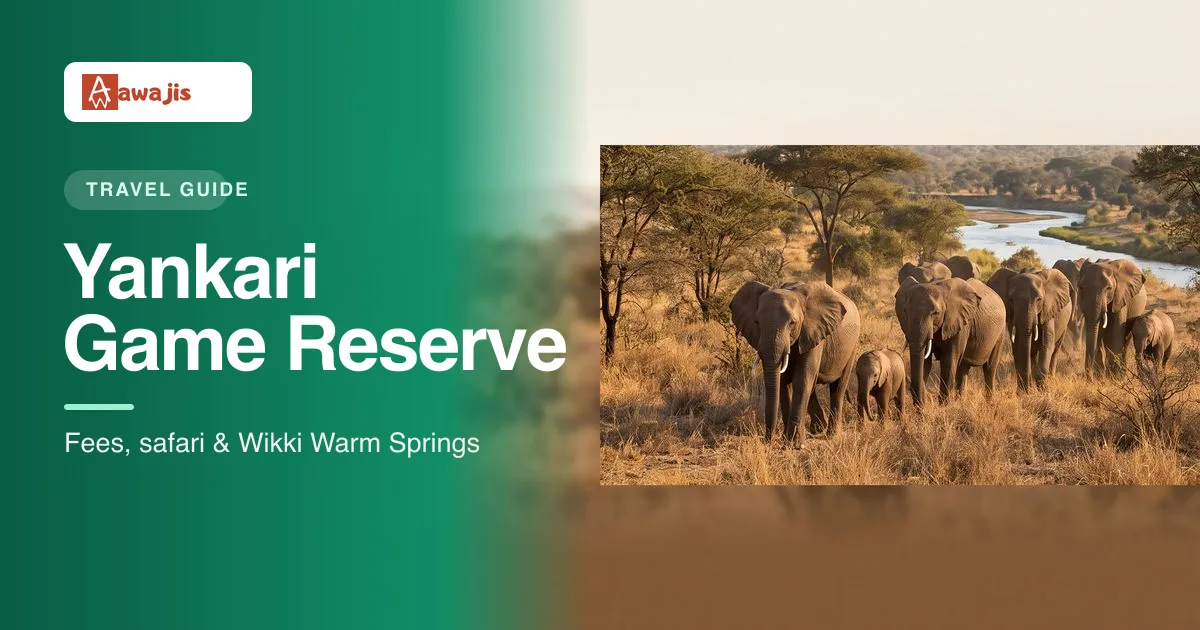
Yankari Game Reserve sits in southern Bauchi State, about 110 km from Bauchi city (roughly a 2-hour drive). Budget ₦2,000–₦3,000 per adult at the gate, ₦6,000–₦8,000 for a safari game drive, and from about ₦9,500 a night to sleep at Wikki Camp inside the park. The best months are November to April.
It is Nigeria’s best-known wildlife destination: 2,244 km² of savannah woodland, the country’s largest surviving elephant herd, and a warm spring you can swim in at midnight. This guide covers the real costs, what you will actually see, and how to get there without an agent.
Quick Facts
| Item | Detail |
|---|---|
| Location | Southern Bauchi State; main gate at Mainamaji, off the Bauchi–Gombe road |
| Size | 2,244 km² (Nigeria’s largest game reserve) |
| Gate fee (adult) | ₦2,000–₦3,000 (as of last public update — confirm by phone) |
| Gate fee (child/student) | About ₦800 |
| Safari game drive | ₦6,000–₦8,000 |
| Rooms at Wikki Camp | ≈₦9,500 (budget) to ₦236,000 (villa) per night; hostel beds cheaper |
| Best time | November–April (dry season); December–February is coolest |
| Contact | +234 902 733 2226 · info@yankarigamereserve.com.ng |
Fees at Yankari change without much announcement, and different desks sometimes quote different numbers. Call ahead, and carry cash — POS and bank network inside the park are unreliable.
What You Will Actually See
Yankari holds an estimated 100–150 elephants — the largest population left in Nigeria. Sightings are common on morning drives in the dry season, when herds come to the Gaji River to drink. You will also see buffalo, waterbuck, roan antelope, hartebeest, warthogs, hippos, crocodiles, and troops of baboons that patrol Wikki Camp like they pay rent. Over 350 bird species have been recorded.
Be realistic about the big cats. A small number of critically endangered West African lions survive in Yankari, but sightings are extremely rare. If a tour promises you lions, that is marketing, not biology.
Poaching pressure hit the reserve hard in the 2000s — the elephant herd fell from around 350 to today’s numbers. Since 2014 the Bauchi State Government has run ranger patrols with the Wildlife Conservation Society, and the park has recorded long stretches with zero elephant poaching.
Wikki Warm Springs
The spring is the reason many visitors come. Crystal-clear water flows out of the rock at a constant 31°C, forming a natural pool about 200 metres long, up to 13 metres wide and around 2 metres deep. It is open 24 hours and lit at night — swimming under floodlights after a hot safari day is the park’s signature experience.
The spring sits directly below Wikki Camp, down a short flight of steps. Keep food out of sight on the way — the baboons are professional thieves.
How to Get There
From Bauchi city
- Take a taxi or bus from Bauchi toward Gombe and drop at Dindima/Mainamaji junction, or charter a cab straight to the gate (about 110 km).
- Pay your entry at the main gate.
- Continue 42 km inside the reserve to Wikki Camp. There is no regular shuttle, so come with a vehicle or arrange one in Bauchi — okada riders at the junction will only take you as far as the gate.
From Abuja, Lagos or Jos
- By air: fly Lagos or Abuja to Bauchi, then go by road as above. Book the road leg before you land; airport taxis charge a premium.
- By road: Abuja to Bauchi is a 6–7 hour drive through Jos; Jos to Bauchi is about 2 hours. Night travel on these routes is not advisable — leave early. Intercity buses run daily; see our GIGM price list for current fares.
Where to Stay: Wikki Camp
Wikki Camp is the only accommodation inside the reserve — around 110 chalets from student hostel beds to the Marshall Suite and corporate villas. Published rates run from about ₦9,500 to ₦236,000 a night, with hostel beds cheaper for student groups. There is a restaurant and bar; simple meals start around ₦1,000–₦3,000.
Book ahead for December–February and public holidays — school excursions can fill the cheap rooms. Power comes and goes on a generator schedule, so charge your devices when the light is on.
Sample Budget (per person, from Bauchi)
| Item | Estimate |
|---|---|
| Return transport from Bauchi | ₦10,000–₦20,000 (shared/chartered) |
| Gate fee | ₦2,000–₦3,000 |
| Safari game drive | ₦6,000–₦8,000 |
| Meals (day trip) | ₦3,000–₦5,000 |
| Day trip total | ≈₦21,000–₦36,000 |
| Add a budget room (overnight) | +₦9,500–₦25,000 |
Treat these as planning figures, not quotes. Prices move with fuel costs, and group size changes the transport share a lot.
Best Time to Visit
Go between November and April. The bush is thin, animals gather at the river, and December–February harmattan keeps the heat bearable. In the rains (May–October) the grass grows tall, some tracks flood, and you can drive for hours without a sighting. The warm spring is good all year.
A Short History
Yankari was created as a game reserve in 1956, upgraded to a national park in 1991, and handed back to Bauchi State control in 2006 — which is why you will see it called both “Yankari Game Reserve” and “Yankari National Park.” Same place.
Related Guides
- Best tourist attractions in Nigeria
- Things to do at Mambilla Plateau
- Best honeymoon spots in Nigeria
Leave a Reply