There are a lot of tricks that lawyers use in depositions. Defending a deposition is important because it requires you to protect your client’s testimony and your client’s case.
Depositions are high-stakes interviews where lawyers test witnesses, gather evidence, and create a record. This post explains common tactics lawyers use in depositions, why they use them, and practical, courtroom-ready ways witnesses and their counsel can respond. Perfect for witnesses, paralegals, and lawyers wanting a refresher.
The most common tricks attorneys employ during a deposition include objections, making references to items outside the purview of discovery, talking about privileged information, bringing up the past, discussing a situation, requesting a break, requesting additional information, or refusing to answer a question.
So in this post, we cover 25 tips and tricks Lawyers use in depositions to their advantage. Continue reading!
What is a Deposition?
Out-of-court, sworn testimony provided by a witness in a lawsuit is called a deposition. Witnesses will be sworn in just as if they were in a courtroom. Through depositions, a party can know what a witness would say in court ahead of time.
A deposition is not a casual conversation — it’s a formal, recorded proceeding that can shape the outcome of a case. Lawyers use a range of techniques to (1) lock in testimony, (2) find inconsistencies to impeach witnesses later, and (3) elicit admissions or admissions by implication. Knowing the common tactics and responses reduces surprises and prevents small mistakes from becoming major problems.
Tricks Lawyers Use in Depositions
1. Objections
Objections are just delays. The witness must give himself some time to hear the question, think about what it might mean, glance up at his interrogator, and then ask, “What did he say?”
He must then wait for the word “objection,” followed by the justification for the objection, which takes time. The best objections are those raised later. Objections are some of the tricks lawyers use in depositions to their advantage, and they come in different forms.
2. Not Relevant
The word “Immaterial!” is inadmissible, but if you use it correctly, you can get away with it. If the opposing attorney is not in a pleasant mood, you won’t get a response from him.
For the record, the term “immaterial” refers to something that is not significant or has no influence on the case’s concerns. Only questions that are pertinent to the witness’s testimony should be allowed to be asked.
3. The ONE-TWO punch
“Do you have any documentation that shows your time records for the period in question?” generally asks the difficult questioner who has been playing cat and mouse with the witness. He exclaims, “Yes!” and pulls out his pocket-sized datebook containing actual entries.
Unless the magic words “That question calls for a legal conclusion” are followed by “I direct you not to answer until I consult with counsel,” an answer constitutes an admission. The attorney can then choose whether or not to respond.
4. NO Response
“I instruct the witness not to respond!” When opposing counsel objects, you can inquire if he is objecting based on form or substance.
If you’re confident it’s newly formed, answer the question if one of your objections is sustained. Unless there is another reason why you cannot. They have to rephrase it if you object based on form. You now have two nibbles at the apple.
5. No Preparation
“I oppose it because I haven’t had time to prepare!” This is typical when documents are submitted for inspection, and there is no time to review them before the deposition.
When you hear this, you can usually ask about specific documents or groupings of documents, such as all those labeled “evidence 10A,” and so on.
6. Continuance
“I object because I’m going to request a continuance. If they request a continuance, they must provide a valid reason why they weren’t granted one before the deposition.
If they were off having fun while you were working on your brief, that might leave them toast and will likely result in legal fees they will have to pay. This is one of the most used Tricks Lawyers use in a deposition.
7. Directed Verdict
I move for a Directed Verdict, please. This is only acceptable when you are entitled to something based on the facts or pleadings, and they have asked for it informally, but you are entitled to it as well.
Use it only after thoroughly examining your situation and determining whether it will be helpful. Then act quickly so that opposing counsel doesn’t have a chance to guess what you’re planning.
There are situations when lawyers who are concerned about losing a case may draft it for you. Turn around and say, “I object,” if they do.
8. Recession
“I request a recess.” You can grant or decline this request as you see fit. Some lawyers will grant it automatically, while others will refuse unless there is a compelling justification.
It’s often a luxury to be the only one working on your case because you can easily go into another room to finish papers or seek authorities while they’re out playing or planning against you.
You don’t have to explain why, but if you do (for example, “because I have a dentist appointment”), you’ve let them in.
You’ll have to keep explaining your arguments till hell freezes over. If they’re preparing something and there’s time before lunch or quitting time, ask them to get their documents in order to continue if you need to go into another room.
9. Mistrial
This is the right way to raise objections: “I motion for a mistrial.”
10. Read Out Of Context
Another method is to read them partially rather than completely. To do this, choose the crucial phrase that ties everything together, and read it on its own without considering the sentences that follow before or after it.
On this issue, the opponent cannot know what was said earlier or later. When it comes to papers, the deponent should ask for permission to read them into the record. It may sound snarky, but it’s not; think of it as reading lengthy passages that are really useful to you.
Additional Tricks Used by Lawyers During a Deposition
11. Privileged Information
In order to prevent his client from incriminating himself, the witness should object to the question if it requires information that is confidential and/or ask the court for an order (out of earshot of the opposing counsel).
If a question requires privileged information and the witness’s lawyer wants to assert the privilege, he should object to the question on that ground or ask for a protective order away from the witness’s opponent’s counsel.
12. Referencing the Past
Be wary if the opposing side asks you when you last did anything. The query is a well-known “gotcha.”
If the “last time” was a while ago, your answer might pave the way for additional inquiries regarding more recent incidents. It makes sense to claim privilege if the most recent instance was more recent than you would want.
On the other hand, if you are not claiming privilege, keep your response brief and only mention the most recent instance of your behavior. For instance, “Ms. Gray, isn’t it true that you considered changing the test results after Mr. White complained about them?”
13. Referencing A Situation
Be wary if the opposing side inquires about “the first time” you performed an action. The query is yet another typical “gotcha.”Your answer might trigger a sequence of inquiries regarding more recent events if the “first time” was a long time ago. It makes sense to claim privilege if the first instance was more recent than you would have liked.
On the other hand, if you are not claiming privilege, keep your testimony to the first instance of your actions and limit the scope of your response. For instance, “Mr. George, isn’t it true that you spoke with Mr. Gary regarding Ms. Doe’s claims of sexual harassment?”
14. Leading or loaded questions (with a built-in assumption)
Example: “You signed the contract on March 1, didn’t you?”
Goal: Get the witness to confirm an assumption without proving it.
How to handle: Pause, correct the assumption if false (“I did not sign on March 1”), or answer only what you know (“I don’t recall the exact date; I’d need to see the contract to be sure”).
15. Repetition / piling on
Example: Asking the same question multiple ways to wear the witness down.
Goal: Create inconsistency or catch a slip.
How to handle: Give consistent answers; if the question is repeated, politely restate your prior answer. Don’t change your answer out of irritation.
16. The “badgering” or hostile approach
Example: Interrupting, raising voice, or asking rapid-fire questions.
Goal: Rattle the witness into a mistake or admission.
How to handle: Keep calm, speak slowly, and ask for the question to be repeated if needed. Use short, neutral answers.
17. Compound or multi-part questions
Example: “Did you sign the form and send an email confirming it?”
Goal: Trap the witness into an accidental “yes” when one part is false.
How to handle: Break the question down: answer each part separately (“I signed the form. I did not send that email.”).
18. Asking for legal conclusions
Example: “Was that harassment?”
Goal: Push the witness to make a legal judgment that may be used against them.
How to handle: Stick to facts and perceptions: “I felt uncomfortable” or “He said X.” Leave legal conclusions to attorneys or the court.
19. Mischaracterizing prior testimony or documents
Example: “In your deposition last month, you said X,” when you did not.
Goal: Force a contradiction to impeach credibility.
How to handle: Respectfully correct the record: “I don’t recall saying that. Could you point me to the page?” Ask to review the transcript or exhibit.
20. Hypothetical questions designed to trap
Example: “If you’d known about X, would you have done Y?”
Goal: Lead the witness into speculation or admissions.
How to handle: Avoid speculation. Preface answers with “I can’t say” or “I don’t know” when asked to imagine facts that didn’t occur.
21. Document dumps and surprise exhibits
Example: Producing large stacks of documents at the start and asking the witness to comment.
Goal: Overwhelm the witness and elicit inconsistent or careless answers.
How to handle: Ask for time to review documents (if reasonable) and answer only about documents you’ve actually reviewed.
22. “Fishing” for new facts or impeachment material
Example: Asking broad questions, hoping the witness will volunteer damaging details.
Goal: Discover unanticipated statements to use later.
How to handle: Be concise; don’t volunteer extraneous information. Answer only what is asked.
23. Strategic pauses and silence
Example: Lawyer pauses after an answer, hoping the witness will fill the silence.
Goal: Get the witness to add more than necessary.
How to handle: Don’t fill the silence. Stop when you’re done answering. Short answers are safer.
24. Speaking objections and coaching
Example: Counsel objects and then instructs the witness to change their answer.
Goal: Influence the record or confuse the witness.
How to handle: If you’re represented, follow your attorney’s instructions. If unrepresented, state your intention to answer or to consult counsel and do not be coached by opposing counsel.
25. Anchoring and framing
Example: Using a high/low figure early to make other numbers seem reasonable.
Goal: Influence perceptions about damages, timelines, or responsibility.
How to handle: Don’t accept figures you haven’t verified; ask for the basis of the number before agreeing.
Read: How Long Can a Divorce be put on hold
How to Prepare for a Deposition as a Witness
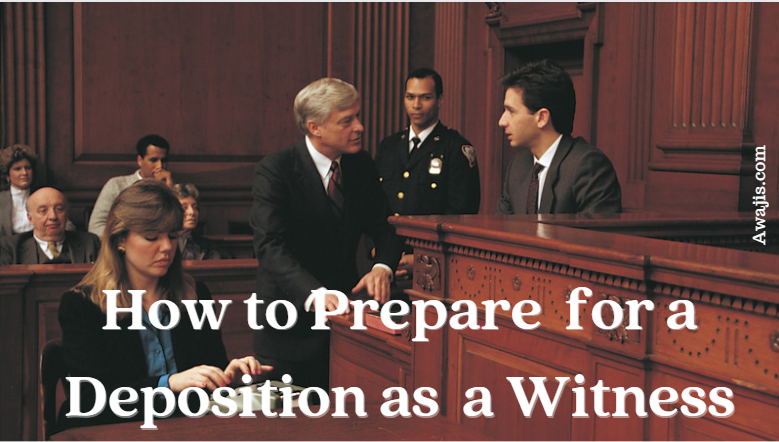
Your lawyer should be present for any deposition you are compelled to participate in as your legal representative. This is done to safeguard your interests because the other legal team might ask questions in an awkward or unsuitable manner, leading you to provide the wrong response.
Top Tips for a Successful Deposition
You should adhere to the following basic and general rules while taking depositions:
- There’s no need to respond hastily. No time limit applies to filing a deposit. Before responding, take a moment to consider each question carefully. Ask for clarification if something in the question is unclear or imprecise.
- If the opposing attorney acts improperly, call attention to it on the record.
- If it is optional to fully address the issue, do not provide any extra information. You might get hurt by doing so. Sometimes the best response is a simple yes or no, and one-word responses are acceptable.
- Never falsify the truth. If you give a false answer while you are under oath, you risk being prosecuted for perjury later.
- Never guess; only provide knowledge that you can be certain of. It is appropriate to respond, “I don’t know,” because that is the truth when you are unsure of your response.
- Your attorney must review and approve everything you bring to the deposition in advance. Remember that they are your counsel and acting in your best interests.
- Questions should not be answered if your attorney objects to them. They are protesting for a reason, and that reason is most likely because you are in danger.
- Lawyers might start a sentence with a factually false or debatable remark; don’t let this go by without commenting. Similarly, if attorneys paraphrase your comments, insist that they are true.
- Avoid mistaking polite banter between opposing counsels for an enjoyable chat. Don’t joke around or discuss anything with the opposing attorneys outside the deposition.
Practical do’s and don’ts for deponents
Do:
-
Pause before answering; collect your thoughts.
-
Answer only the question asked; don’t volunteer extra information.
-
Say “I don’t know” or “I don’t recall” if truthful.
-
Ask for clarification when a question is ambiguous.
-
Tell the truth; inconsistencies are weaponized later.
-
Tell your attorney if you think something needs correction.
-
Maintain a calm, professional demeanor — tone matters in perception.
Don’t:
-
Guess or speculate.
-
Answer compound questions with a single “yes” unless both parts are true.
-
Argue with opposing counsel — stay neutral.
-
Try to be funny, dramatic, or evasive.
-
Forget to say you don’t understand a question if you don’t.
-
Allow yourself to be rushed into a response.
How attorneys prepare witnesses
-
Conduct at least one mock deposition with rapid-fire and hostile questioning to desensitize the witness.
-
Review all relevant documents and timeline with the witness; mark exhibits clearly.
-
Practice concise answers (one- or two-sentence responses).
-
Explain common tactics and the witness’s likely reactions.
-
Review privilege rules and how to respond to questions that seek privileged communications (e.g., “I decline to answer on advice of counsel”).
-
Discuss how to handle speaking objections or instructions from opposing counsel.
-
Prepare the witness to say “I don’t know” rather than guessing.
Sample Q&A: common trick + model response
Trick question: “So you weren’t present at the meeting on March 5, correct?”
Trap: It assumes a negative and invites a simple “correct/incorrect.”
Good response: “I was not present for the entire meeting. I arrived about halfway through.”
(If factually true, be precise rather than conceding the lawyer’s phrasing.)
Compound question: “Did you sign the memo and send it to Ms. Jones?”
Good response: “I signed the memo on April 2. I did not send it to Ms. Jones.”
(Separates the elements and prevents accidental admission.)
Hypothetical: “If you had received that email, would you have forwarded it?”
Good response: “I can’t answer hypotheticals about something I didn’t receive. I can explain what I normally do with that type of email.”
(Refuses speculation, but offers contextual practice if helpful.)
Common objections you may hear
-
Leading: Suggests the answer. (Common on cross-examination.)
-
Compound: Multiple questions in one.
-
Calls for speculation: Asks the witness to guess.
-
Calls for hearsay: Asks about out-of-court statements as truth.
-
Vague/ambiguous: Question is unclear.
When an objection is made, the witness should not speculate; wait for instruction. If your attorney says “answer,” answer precisely; if told not to, remain silent.
Red flags that suggest counsel is fishing or acting improperly
-
Repeated misstatements of your prior testimony.
-
Counsel coaching the witness (speaking instructions).
-
Excessive document dumping without allowing reasonable review.
-
Intimidation tactics that cross into harassment.
If these occur, notify your attorney immediately; your attorney may raise formal objections or seek protective relief.
FAQs
Q: Am I allowed to review documents during a deposition?
A: Yes — you may review exhibits that are shown to you. If there are many documents, request reasonable time to review before answering.
Q: Can I take a break?
A: Yes. Depositions can be long; reasonable breaks are normal. If opposing counsel refuses, your attorney can request a break or protection from the court.
Q: What if I realize later that I made a mistake in my deposition?
A: Inform your attorney. You may be able to correct the record by errata to the transcript or in later testimony, but material changes can raise credibility issues, so be transparent and prompt.
Final thoughts — control, clarity, credibility
Depositions reward control and punish speculation. Opposing counsel will try many tactics; your best defense is consistent preparation, concise answers, and a calm demeanor. Lawyers can pressure or distract, but they cannot change facts — a clear, honest, and steady record will serve you best.
Read Related:
Motorcycle No Chase Law States
Commercial Loan Truerate Services
Top 22 Risks of Hiring a Private Investigator
Leave a Reply
You must be logged in to post a comment.