The Tunisian dinar is Africa’s highest-valued currency, trading at roughly 1 USD = 2.89 TND (each dinar buys about US$0.35). The Libyan dinar sits at #2 near 1 USD = 6.35 LYD. The Moroccan dirham, Ghanaian cedi, Botswana pula and Seychellois rupee round out the top six. The Nigerian naira does not make this list.
A currency’s strength tracks economic management more than country size. Rates below are mid-market quotes from late May 2026 (Xe, Wise, Trading Economics). You can also read What Is The Highest Currency In The World?
Which 10 African currencies are worth the most against the US dollar?
1. Tunisian Dinar (TND)
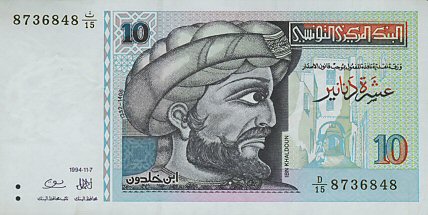
The Tunisian dinar still leads Africa. Tunisia restricts dinar exports, runs a managed float, and pairs that with tight monetary policy. A diversified economy spanning tourism, agriculture and manufacturing softens commodity shocks.
Rate: 1 USD ≈ 2.89 TND (1 TND ≈ US$0.35)
2. Libyan Dinar (LYD)
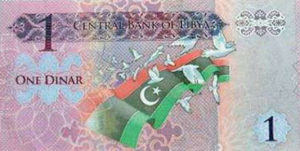
The Libyan dinar lost about 15% against the dollar in the past 12 months but still holds #2 on this list. Libya’s oil reserves and the Central Bank of Libya’s currency controls keep the official rate strong despite political instability.
Rate: 1 USD ≈ 6.35 LYD (1 LYD ≈ US$0.157)
3. Moroccan Dirham (MAD)
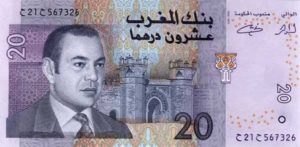
The dirham is pegged to a basket dominated by the euro and the US dollar. Bank Al-Maghrib manages it inside a controlled band, which limits day-to-day swings.
Rate: 1 USD ≈ 9.18 MAD (1 MAD ≈ US$0.109)
4. Ghanaian Cedi (GHS)
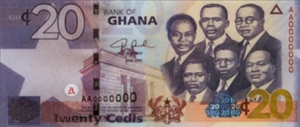
The cedi weakened 13% over the past year despite the IMF programme. Gold and cocoa exports keep it inside the top five, but inflation pressure remains. Watch monthly Bank of Ghana auctions for direction.
Rate: 1 USD ≈ 11.61 GHS (1 GHS ≈ US$0.086)
5. Botswana Pula (BWP)
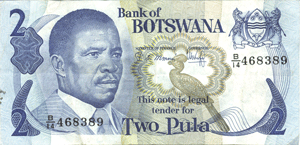
Botswana’s diamond exports and conservative fiscal policy keep the pula stable. The Bank of Botswana pegs it to a basket made up of the South African rand and the IMF’s Special Drawing Rights.
Rate: 1 USD ≈ 13.46 BWP (1 BWP ≈ US$0.075)
6. Seychellois Rupee (SCR)
Seychelles has the highest nominal GDP per capita in Africa. Tourism and fisheries earn the country foreign exchange, which supports the rupee.
Rate: 1 USD ≈ 13.81 SCR (1 SCR ≈ US$0.072)
7. Eritrean Nakfa (ERN)
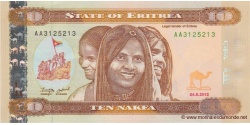
The nakfa is fixed by the government at 15 ERN to the US dollar. The official rate has not moved in years. Black-market rates run far higher because the currency is not freely convertible.
Rate: 1 USD = 15 ERN (official, fixed)
8. South African Rand (ZAR)
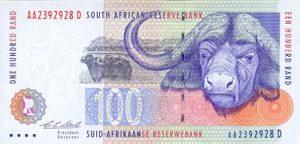
The rand strengthened nearly 10% over the past year, helped by a South African Reserve Bank rate hike in early 2026 — its first since 2023. The rand is Africa’s most-traded currency on global FX markets and reacts sharply to commodity prices and political news.
Rate: 1 USD ≈ 16.22 ZAR (1 ZAR ≈ US$0.062)
9. Namibian Dollar (NAD)
Namibia introduced the Namibian dollar in 1993 to replace the South African rand. The NAD is pegged 1:1 to the rand and circulates alongside it inside Namibia. Mining and tourism drive the economy.
Rate: 1 USD ≈ 16.22 NAD (pegged 1:1 to ZAR)
10. Zambian Kwacha (ZMW)
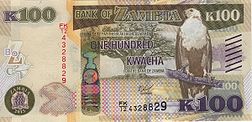
The kwacha rallied through 2025–26 on the back of higher copper prices and IMF-backed reforms, gaining over 30% against the dollar in the past 12 months. Copper exports continue to drive the economy.
Rate: 1 USD ≈ 18.45 ZMW (1 ZMW ≈ US$0.054)
Honourable mention: Egyptian Pound (EGP)
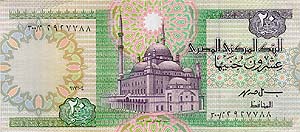
The pound was a long-time entrant on this list but lost ground after the Central Bank of Egypt floated it in March 2024. It now trades on a more flexible framework backed by IMF oversight and Gulf support, and sits far weaker than the currencies above.
Rate: 1 USD ≈ 52.22 EGP (1 EGP ≈ US$0.019)
Which are Africa’s weakest currencies?
São Tomé and Príncipe Dobra (STN)

The dobra is the currency of São Tomé and Príncipe, a small island nation off Central Africa. The dobra is pegged to the euro at 24.5 STN to 1 EUR, which puts it near 22 STN to the US dollar after redenomination in 2018.
Sierra Leonean Leone (SLE)

Sierra Leone redenominated its leone in 2022, dropping three zeros. The new leone (SLE) trades at roughly 22.5 SLE to 1 USD. The currency has lost value steadily since 2016 because of weak diamond and iron ore export earnings.
Guinean Franc (GNF)

The Guinean franc trades at roughly 8,650 GNF to 1 USD. Guinea exports bauxite and gold but high inflation and political instability weigh on the currency.
Burundi Franc (BIF)

The Burundi franc is one of Africa’s weakest currencies, trading near 2,950 BIF to 1 USD. Burundi remains one of the world’s poorest economies. The East African Community has discussed a single currency that would replace the franc, but the project is still in planning.
What drives African currency strength?
Inflation
Low inflation supports currency value. Tunisia, Morocco and Botswana run single-digit inflation and hold strong currencies. Sudan, Zimbabwe and Sierra Leone run double-digit inflation and their currencies have collapsed in value over the past decade.
Interest rates
Higher central bank rates attract foreign capital chasing yield, which raises demand for the local currency. The trade-off is slower domestic growth, since loans for businesses and consumers cost more.
Foreign exchange reserves
Countries with deep reserves can defend their exchange rate during shocks. Libya, Algeria and Botswana hold reserves worth several months of imports, which gives their central banks room to intervene.
Political stability
Coups, conflict and policy uncertainty drive capital out of a country. The CFA franc zones in West and Central Africa benefit from a French Treasury guarantee, which insulates them from local political risk.
Export mix
Countries with diversified exports (Morocco, Tunisia, South Africa) ride out commodity price swings better than single-commodity exporters (Zambia, Nigeria, Angola).
Full list of African currencies
| Country or territory | Currency | ISO-4217 |
|---|---|---|
| A | ||
| Algeria | Algerian dinar | DZD |
| Angola | Angolan kwanza | AOA |
| Ascension Island (UK) | Saint Helena pound | SHP |
| B | ||
| Benin | West African CFA franc | XOF |
| Botswana | Botswana pula | BWP |
| Burkina Faso | West African CFA franc | XOF |
| Burundi | Burundi franc | BIF |
| C | ||
| Cabo Verde | Cabo Verdean escudo | CVE |
| Cameroon | Central African CFA franc | XAF |
| Central African Republic | Central African CFA franc | XAF |
| Chad | Central African CFA franc | XAF |
| Comoros | Comorian franc | KMF |
| Congo, Democratic Republic of the | Congolese franc | CDF |
| Congo, Republic of the | Central African CFA franc | XAF |
| Cote d’Ivoire | West African CFA franc | XOF |
| D | ||
| Djibouti | Djiboutian franc | DJF |
| E | ||
| Egypt | Egyptian pound | EGP |
| Equatorial Guinea | Central African CFA franc | XAF |
| Eritrea | Eritrean nakfa | ERN |
| Eswatini | Swazi lilangeni | SZL |
| Ethiopia | Ethiopian birr | ETB |
| G | ||
| Gabon | Central African CFA franc | XAF |
| Gambia | Gambian dalasi | GMD |
| Ghana | Ghanaian cedi | GHS |
| Guinea | Guinean franc | GNF |
| Guinea-Bissau | West African CFA franc | XOF |
| K | ||
| Kenya | Kenyan shilling | KES |
| L | ||
| Lesotho | Lesotho loti | LSL |
| Liberia | Liberian dollar | LRD |
| Libya | Libyan dinar | LYD |
| M | ||
| Madagascar | Malagasy ariary | MGA |
| Malawi | Malawian kwacha | MWK |
| Mali | West African CFA franc | XOF |
| Mauritania | Mauritanian ouguiya | MRU |
| Mauritius | Mauritian rupee | MUR |
| Mayotte (France) | European euro | EUR |
| Morocco | Moroccan dirham | MAD |
| Mozambique | Mozambican metical | MZN |
| N | ||
| Namibia | Namibian dollar | NAD |
| Niger | West African CFA franc | XOF |
| Nigeria | Nigerian naira | NGN |
| R | ||
| Reunion (France) | European euro | EUR |
| Rwanda | Rwandan franc | RWF |
| S | ||
| Saint Helena (UK) | Saint Helena pound | SHP |
| Sao Tome and Principe | Sao Tome and Principe dobra | STN |
| Senegal | West African CFA franc | XOF |
| Seychelles | Seychellois rupee | SCR |
| Sierra Leone | Sierra Leonean leone | SLE |
| Somalia | Somali shilling | SOS |
| South Africa | South African rand | ZAR |
| South Sudan | South Sudanese pound | SSP |
| Sudan | Sudanese pound | SDG |
| T | ||
| Tanzania | Tanzanian shilling | TZS |
| Togo | West African CFA franc | XOF |
| Tristan da Cunha (UK) | Pound sterling | GBP |
| Tunisia | Tunisian dinar | TND |
| U | ||
| Uganda | Ugandan shilling | UGX |
| Z | ||
| Zambia | Zambian kwacha | ZMW |
| Zimbabwe | United States dollar / ZiG | USD / ZWG |
Frequently asked questions
What is the highest-valued currency in Africa?
The Tunisian dinar. As of late May 2026, 1 US dollar buys roughly 2.89 Tunisian dinars, which means each dinar is worth about US$0.35. The Libyan dinar sits at #2.
Why is the Tunisian dinar so strong?
Tunisia restricts dinar exports, runs a managed float and maintains tight monetary discipline. The country’s diversified export base — tourism, agriculture, manufacturing — also softens commodity-price shocks that hit single-resource economies harder.
Why do so many African countries share the CFA franc?
Fourteen West and Central African countries use the CFA franc, a colonial-era currency pegged to the euro. The peg is backed by the French Treasury, which gives member countries low inflation and predictable trade rates. The trade-off is that members give up control of monetary policy.
What is the weakest currency in Africa?
The Sierra Leonean leone, Guinean franc and Burundi franc are among the weakest. The São Tomé and Príncipe dobra and the South Sudanese pound also rank near the bottom. Sudan and Zimbabwe have seen the steepest collapses in recent years.
Which African currency should I invest in?
Most African currencies are not freely convertible and carry capital controls. The South African rand is the only major African currency widely traded on global FX markets. Currency speculation is risky for retail investors. If you want African market exposure, equity ETFs or bond funds are usually a better fit.
Should I take USD, EUR or GBP when travelling in Africa?
The US dollar is accepted at hotels, tour operators and bureaux de change across the continent. The euro works well in North Africa (Morocco, Tunisia, Egypt) and in former Portuguese colonies. Pound sterling is harder to exchange outside Anglophone capitals. Carry crisp, post-2013 USD notes — older or worn notes are often refused or exchanged at a discount.
How are African exchange rates determined?
Most African central banks use a managed float: the rate moves with market supply and demand but the central bank intervenes to smooth swings. A few currencies are pegged outright — the CFA franc to the euro, the Namibian dollar and Lesotho loti to the South African rand, and the Eritrean nakfa to the US dollar. South Africa is the main free-float in Africa.
Leave a Reply